Jess Lance, AICP

Staff Planner

We’re excited to welcome Jess Lance to our Providence office as a Staff Planner. She holds a Master’s degree in Urban and Regional Planning from Ball State University and a Bachelor of Science in Sustainable Development from Appalachian State University. Jess is an AICP planner and a member of both the national and Rhode Island chapters of the American Planning Association.

Originally from North Carolina, Jess discovered her interest in planning early on through hands-on work with green infrastructure. She enjoys collaborating with diverse subsets of communities and helping turn ideas into thoughtful, practical projects and plans.

Jess brings experience in community development and municipal planning, including work with the City of Providence’s Department of Planning and Development. Her background includes community engagement, grant writing and management, and strategic planning, with project experience spanning the Providence Great Streets Master Plan, the Woonasquatucket Vision and River Greenway plans, and updates to the Providence Tomorrow Comprehensive Plan and Safe Streets for All Safety Action Plan.

Outside of work, Jess enjoys hiking, biking, traveling, dance, and exploring Providence’s restaurants and art exhibits.

We’re glad to have you on the team, Jess!
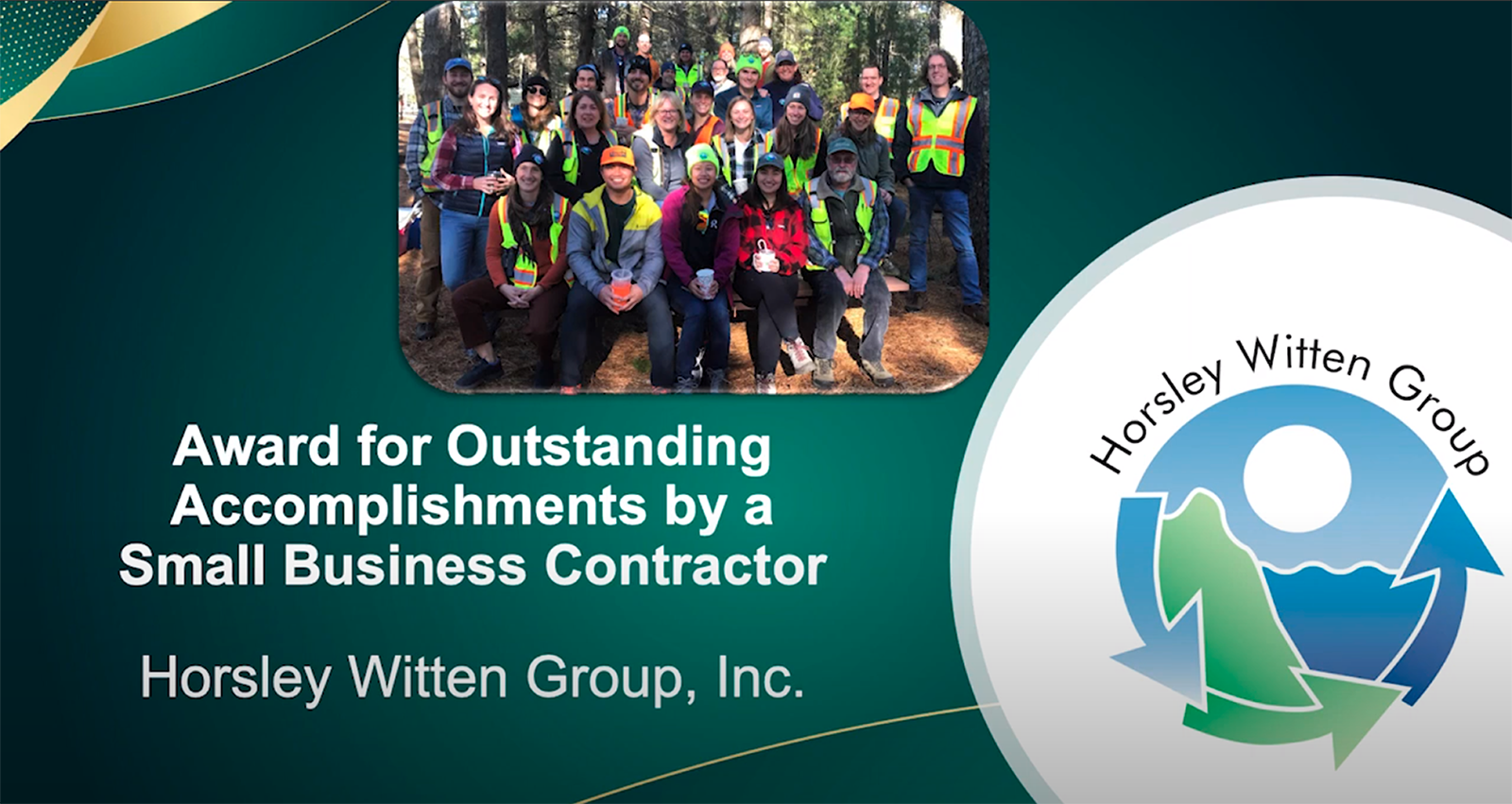


The EPA’s Office of Small and Disadvantaged Business Utilization has recognized Horsley Witten Group for outstanding small business accomplishments. The announcement was made during the Annual Small Business Program Awards Ceremony on May 5, 2022. These awards recognize program activities, individuals, businesses, and state and local entities for their outstanding contributions during Fiscal Year 2021.

HW was one of two small business contractors acknowledged for Outstanding Accomplishments by a Small Business Contractor.

“Thank you, Horsley Witten Group, for your exemplary customer support and technical adaptiveness, acquisition specific managerial, and responsiveness during COVID-19. Thank you for your outstanding commitment.” -EPA award annoucement

For more information, please view the Administrator’s 32nd Annual Small Business Program Awards Ceremony press release and awards ceremony recording.


“The Horsley Witten Group is honored to have been recognized by the U.S. Environmental Protection Agency for its work in supporting the Agency and its mission. Our firm addresses environmental and social challenges with sustainable solutions and it is gratifying to work with a federal agency that thinks the same way.”

– Tom Noble, HW Principal


A rain garden guide for homeowners

By: Michelle West, P.E.

Michelle is a senior water resources engineer with more than 18 years of professional experience. With a background in both engineering and natural resources, she is passionate about using her skills to restore the natural world while improving the human experience.

Before we get started,  a few questions.

  • Have you joined the rain garden craze yet? 
  • Have you been inspired by an article, your neighbor’s rain garden, or our Rain Garden Wednesdays social media posts?
  • Want to do your part to improve your local water quality and wildlife habitat?

It’s easier than you think!

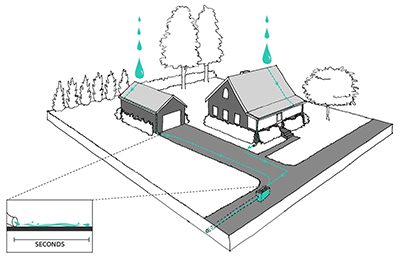
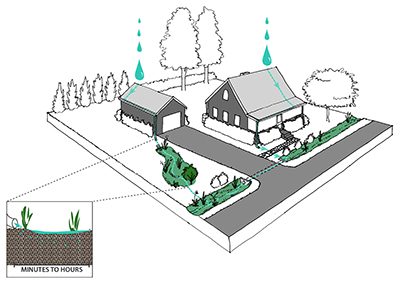
The two illustrations above, right show how “breaking the impervious chain” slows, cleans and reduces the stormwater leaving a site.

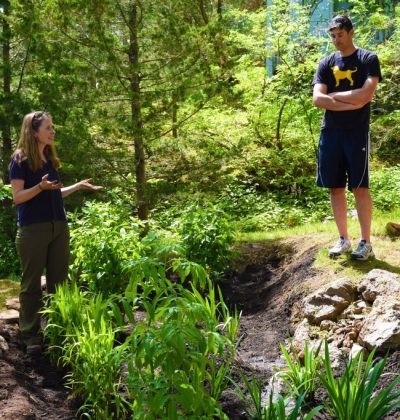
The bottom photo shows Michelle leading a rain garden workshop at Walton’s Cove in Hingham, MA.

What is a Rain Garden?

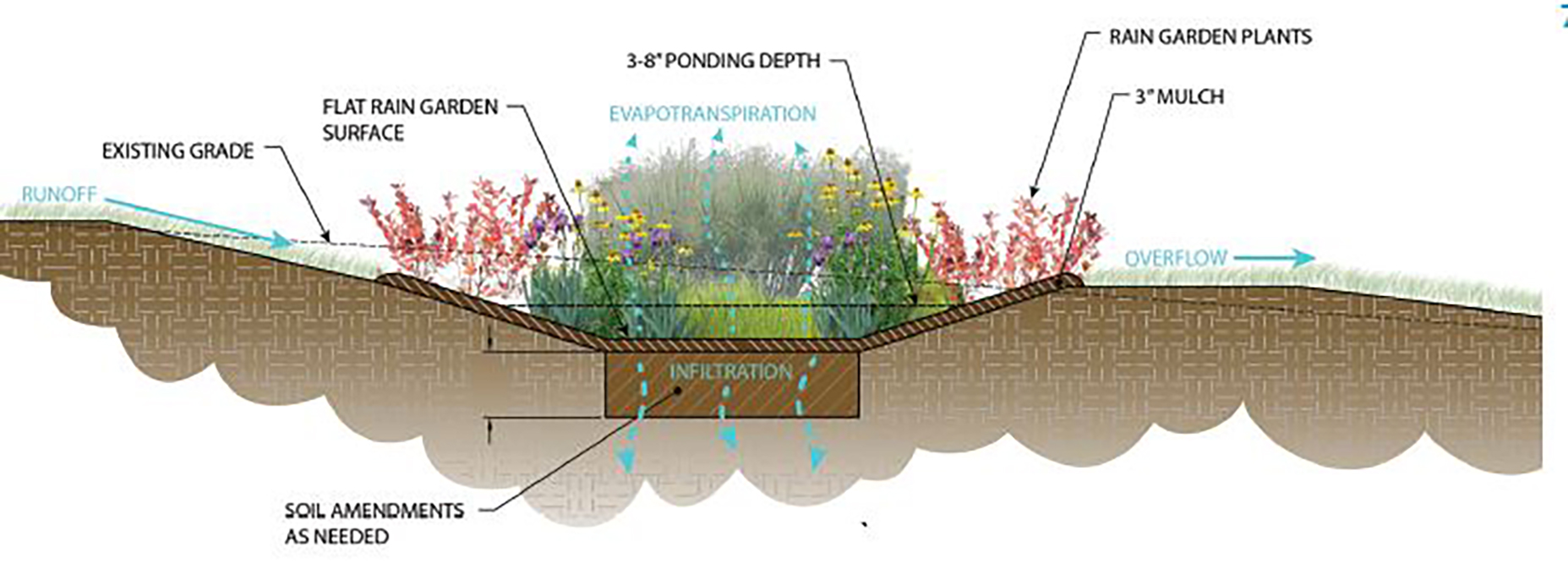
Rain gardens are actually very simple.  They are just shallow depressions – too shallow to even call a hole! – with plants.  But, rain gardens are not just isolated depressions placed randomly out in a yard.  They are specifically sized and placed to absorb stormwater runoff, the water that flows from your built impervious surfaces such as rooftops, driveways, roads, parking lots, and even compacted lawn areas when it rains.  And that’s it!  Well, not quite, since rain gardens do take a bit of planning and physical labor, which we will get to in a bit.


What’s so bad about stormwater runoff?  Why all the fuss?  It’s just rainwater straight from the sky – isn’t that natural? 

Unfortunately, no.  All of those impervious surfaces that we built for our shelter and transportation prevent the clean rainwater from soaking into the ground like it did before we developed the land.  Dirt, fertilizer, soaps, oils, metals, and even animal poop build upon these hard surfaces and get carried away with the stormwater.  In addition to creating water pollution, when your runoff joins up with your neighborhood’s runoff, it can cause flooding and erosion, damage infrastructure, degrade aquatic ecosystems, and close shellfishing areas and beaches.  While runoff from just your home or business may not cause much of a problem, the cumulative impact from everyone’s home and business really does.

Rain gardens are one beautiful way to break the impervious chainof roof to downspout to driveway to road to stream, pond, or bay.  They use soils and plants to filter pollutants and help water soak in rather than runoff.  Please remember that rain gardens are NOT ponds or wetlands – they should drain in less than 24 hours after a rainfall. 

Download the file below to create one at your house!


Cross-section of a typical rain garden:


Click to Download: How to Build a Rain Garden